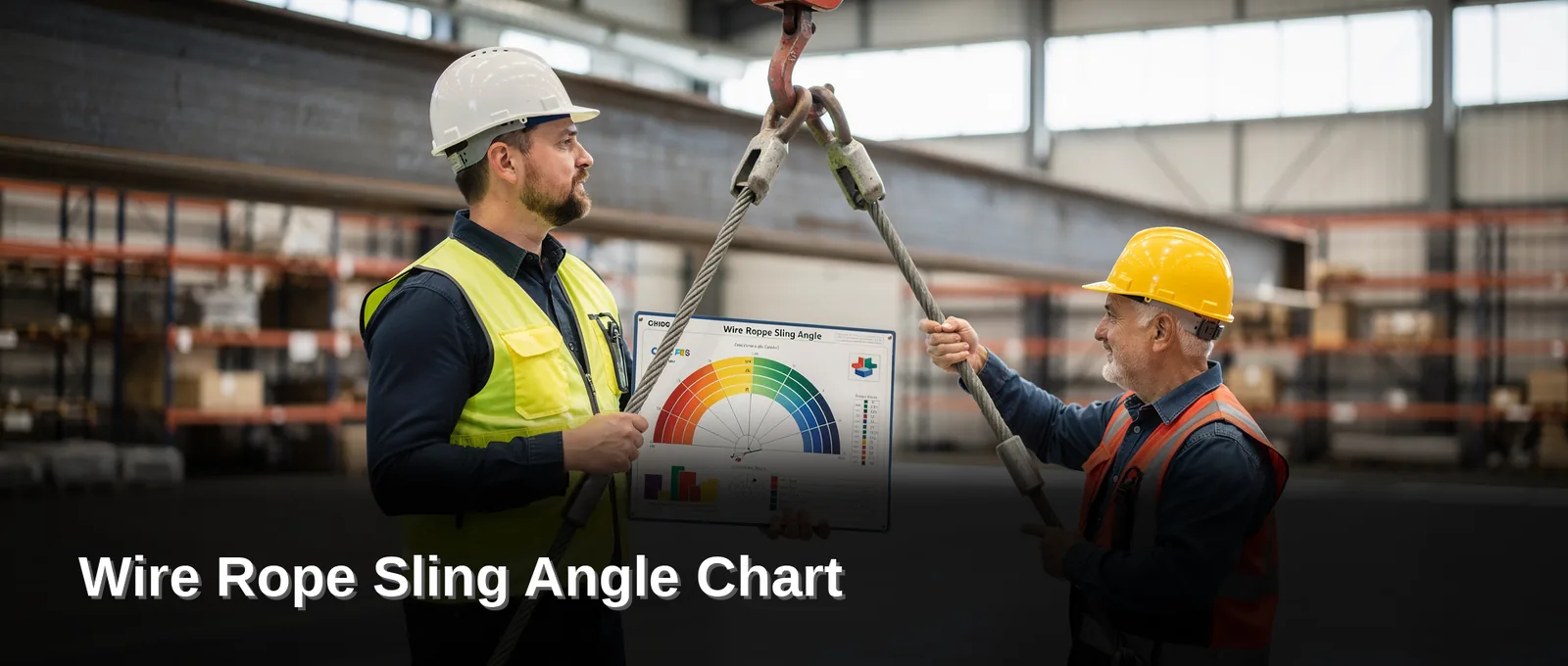
Horizontal sling angles increase tension on each wire rope leg, reducing the sling's rated working load limit (WLL). A shallow angle forces each leg to carry more force than the load's actual weight. Elko Wire Rope emphasizes that understanding this effect is critical for safe rigging in construction and mining.
Why Do Sling Angles Reduce Wire Rope Capacity?
Sling angles reduce wire rope capacity because tension multiplies on each leg as the angle moves away from vertical. A horizontal sling angle of 30 degrees doubles the tension factor, meaning each leg bears tension equal to the full load weight. This geometric reality catches riggers off guard when lift conditions change mid-job.
The physics is straightforward. When sling angles become smaller, each sling leg must carry more force, which reduces the safe working capacity of the sling. The most desirable angle of lift approaches 90 degrees. Lifts with angles below 30 degrees from horizontal are not recommended.
What Happens to Tension at Shallow Sling Angles?
Tension increases on each sling leg as the sling angle decreases from vertical. At a 30-degree horizontal angle, the tension factor rises by 2 times. That doubling effect transfers directly to every component in the rigging assembly.
Why Do Riggers Prefer Angles Near 90 Degrees?
Angles approaching 90 degrees keep leg loading close to a simple mathematical share of the total weight. Shallow angles force each leg to carry significantly more tension than its vertical share of the load's weight. Elko Wire Rope addresses this in its guidance on how lifting angles affect sling capacity, emphasizing that misunderstanding these forces is a leading cause of overload and sling failure.
The wire rope sling angle chart provides the reference data operators need before selecting rigging. Without that check, a lift planned for vertical loading can exceed safe limits once angles shift. The wire rope sling safety factor erodes quickly under shallow-angle tension.
How Do You Read a Wire Rope Sling Angle Chart?
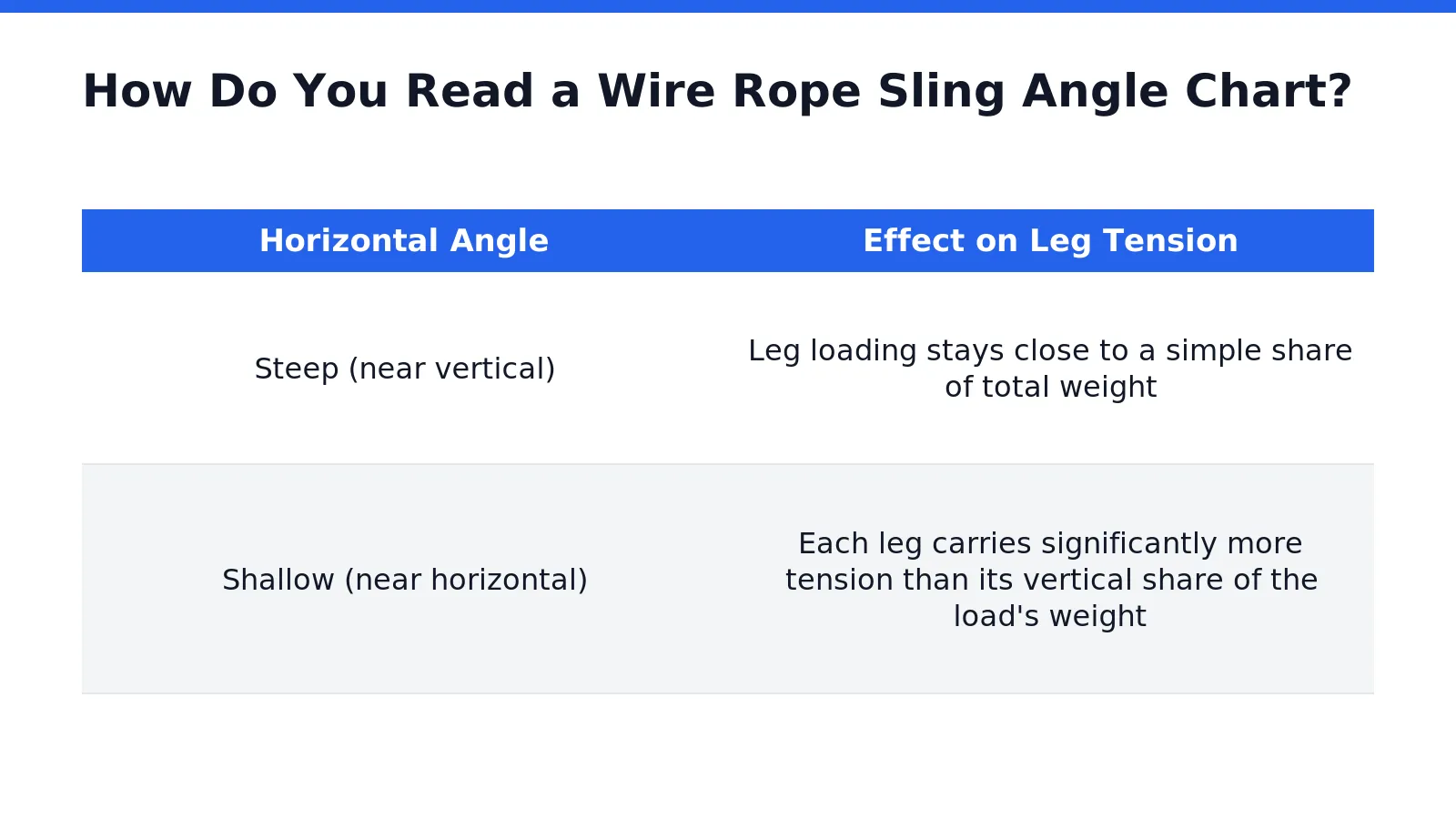
A wire rope sling angle chart converts the measured horizontal angle into a tension multiplier for each sling leg. Reading the chart correctly prevents overloads that occur when shallow angles force legs to carry far more than the load's actual weight. Misreading this relationship is one of the most consistent causes of rigging failures on job sites.
The chart works on a simple principle. A steep angle keeps leg loading close to a simple mathematical share of the total weight. A shallow angle forces each leg to carry significantly more tension than its vertical share of the load's weight. This inescapable relationship between sling angles and capacity is one of the first principles a rigger learns. It also catches personnel off guard when rigging conditions change mid-job.
What Angle Should Riggers Use as a Benchmark?
If appropriate overhead clearance is available, most riggers use a 60-degree equilateral triangle as a benchmark angle. The 60-degree equilateral triangle has three equal sides. That geometry makes it a quick and easy reference point for estimating sling angle without complex measurement.
How Does the Chart Translate Angle to Tension?
The chart lists horizontal angles along one axis and corresponding tension factors along the other. A rigger finds the measured angle, then reads the multiplier that applies to each leg. That multiplier determines whether the selected sling retains adequate capacity for the lift.
Calculations should always be verified by a qualified person. A 2 leg wire rope sling capacity chart applies the same angle logic across two-leg configurations. The wire rope sling safety factor then determines whether the calculated tension stays within acceptable limits for the sling's rated capacity.
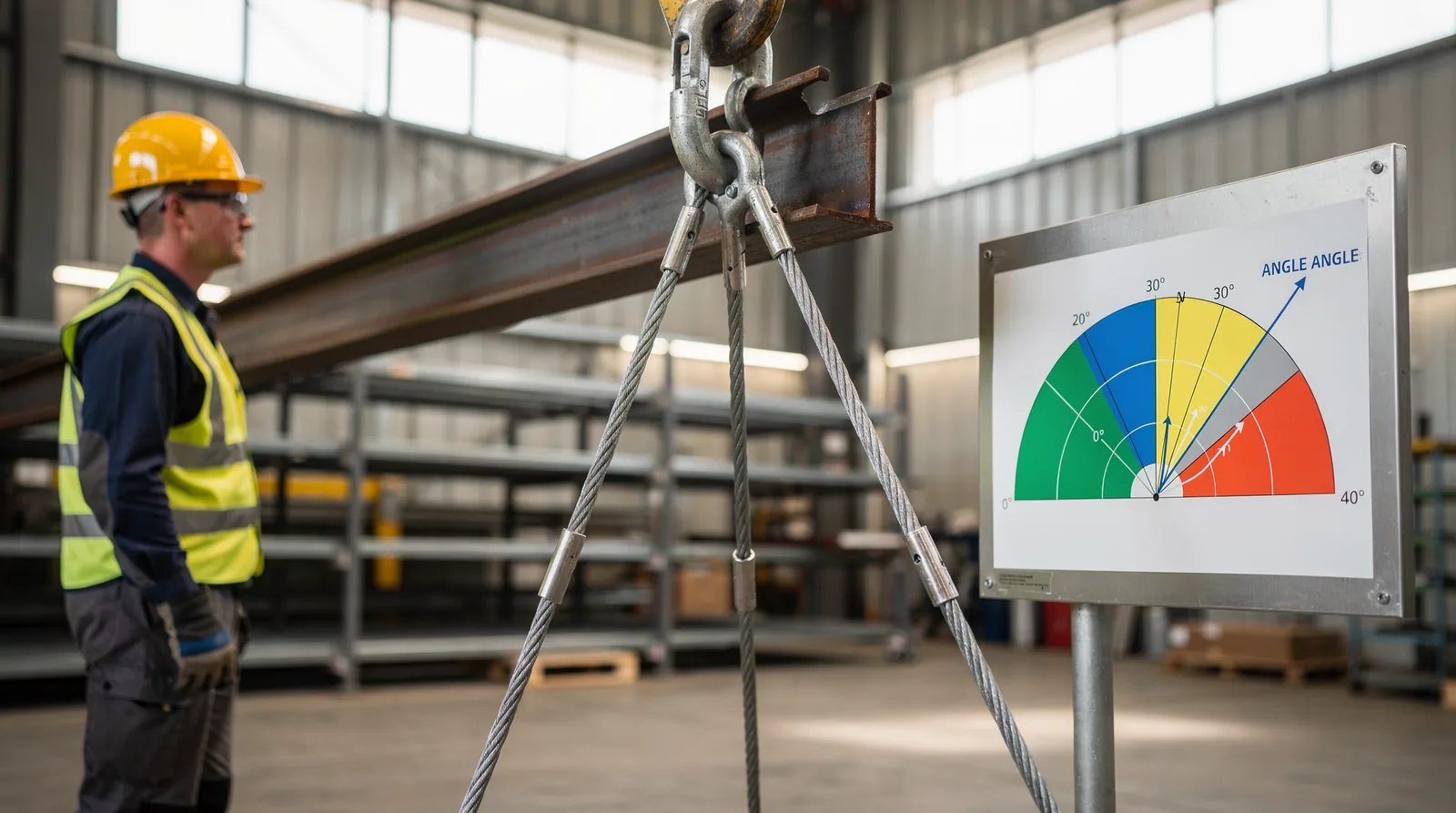
What Does a 2 Leg Wire Rope Sling Capacity Chart Show?
A 2 leg wire rope sling capacity chart maps how much weight a two-leg sling assembly safely handles at different horizontal angles. The chart exists because sling legs rarely hang straight down in real lifts. In industrial, construction, and heavy-lift environments, slings rarely lift loads in a straight vertical line. Most lifts rely on multi-leg sling configurations where the legs operate at an angle.
When two or more wire rope sling legs share a load, the physical angle each leg makes with the horizontal plane dictates exactly how much tension that specific leg carries. These lifting angles directly influence the sling's Working Load Limit. Misunderstanding the effect of these angles is one of the most common causes of overload, sling failure, and job site accidents. When a sling is used at any angle other than vertical, additional tension is placed on the legs. The lower the angle becomes, the greater the tension.
What Happens to Capacity as the Sling Angle Decreases?
The relationship between angle and capacity is inverse. As the horizontal angle drops from 90 degrees toward 30 degrees, each leg carries a larger share of force. A chart translates this geometry into a usable derating factor.
Why Do Riggers Consult the Chart Before Every Multi-Leg Lift?
Riggers consult the chart because angle changes are not visually obvious. A lift that looks stable at 45 degrees may already exceed the sling's safe limit. The chart removes guesswork and prevents the overload that leads to sling failure. Elko Wire Rope supplies slings built to documented ratings, but the angle derating remains the rigger's responsibility on site.
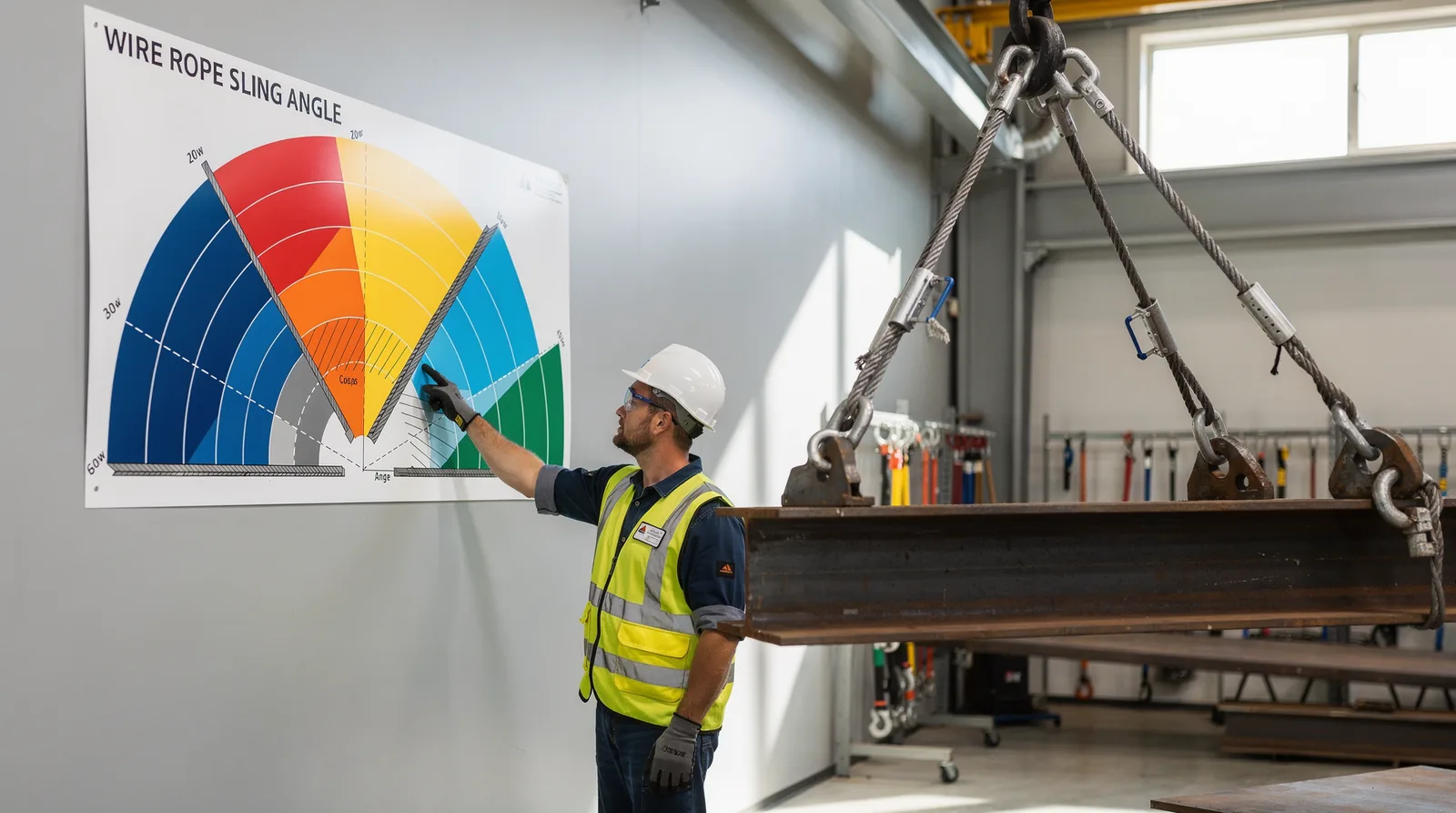
What Is the Wire Rope Sling Safety Factor?
The wire rope sling safety factor is the ratio between a sling's breaking strength and its assigned working load limit. This margin protects rigging crews from catastrophic failure when sling angles, shock loads, or wear conditions deviate from ideal assumptions. Understanding the effect of angles on sling capacities is a critical part of safe rigging. Using slings at an angle can quickly become catastrophic if the angle is not considered prior to selecting which sling to use.
Elko Wire Rope is a leading manufacturer and supplier of high-quality wire rope slings and rigging solutions. The company offers products that adhere to stringent manufacturing standards for safety and reliability. That commitment matters because the safety factor is not a static number. It interacts directly with sling geometry, load distribution, and environmental conditions on every lift.
Why Does the Safety Factor Depend on Sling Angle?
A sling leg operating at a shallow horizontal angle carries significantly more tension than its vertical share of the load's weight. The safety factor absorbs that added tension, but only up to a calculated limit. When riggers ignore angle effects, the margin erodes without any visible warning.
The practical consequence is straightforward. A sling rated for a vertical lift loses usable capacity as the angle decreases. Operators who understand this relationship select slings with adequate reserve strength for the actual rigging configuration.
How Does Elko Wire Rope Address Safety Factor Requirements?
Elko Wire Rope stands out with its dedication to using domestic USA-made products, ensuring quality and supporting local manufacturing. This focus delivers exceptional support and reliability, securing consistent material properties that safety factor calculations depend on.
It is the goal of Elko Wire Rope to provide manufactured rigging products and hardware which are competitively priced and delivered on time with zero defects. For crews evaluating working load capacities of wire rope slings, that defect-free standard means the published safety factor reflects actual product performance, not optimistic assumptions.
The safety factor is only as reliable as the sling behind it. Rigging professionals who pair correct angle calculations with properly manufactured slings keep every lift inside the designed margin.
Conclusion
The rigger who understands the inverse relationship between horizontal angle and leg tension controls the lift's safety margin. Consulting the capacity chart before every multi-leg configuration removes guesswork and prevents the overload that erodes the sling's safety factor. Selecting a sling with adequate reserve strength for the actual rigging angle, not the vertical rating, keeps every lift inside the designed margin.