
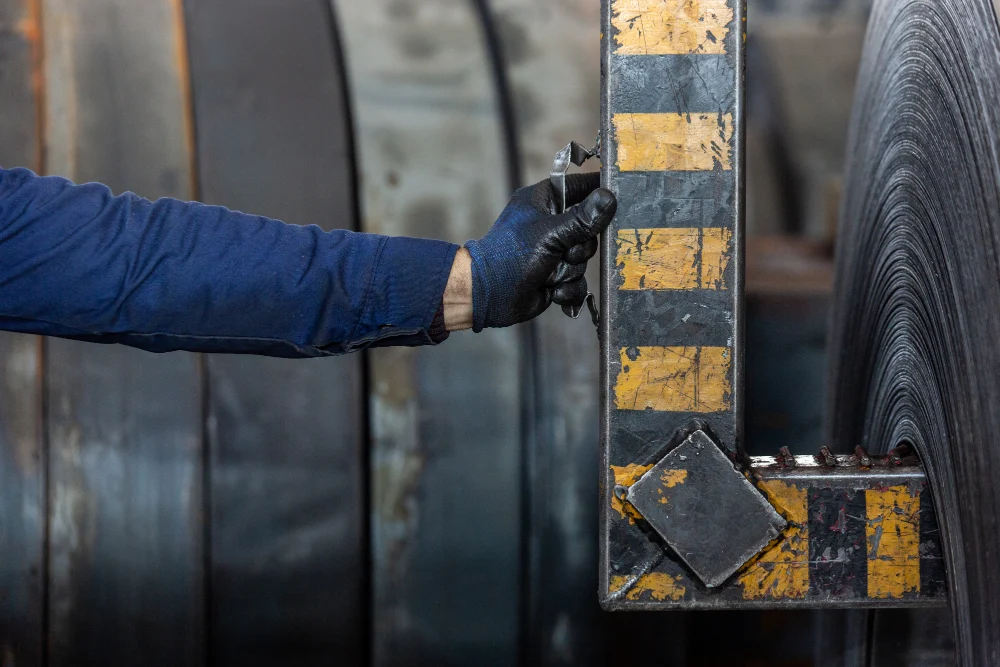
Wire Rope Slings: Single-Leg and Multi-Leg
Wire Rope Slings - Durable Lifting and Rigging Solutions
Wire rope slings are essential rigging hardware designed for heavy-duty lifting, hoisting, and material handling across industries like construction, manufacturing, mining, and marine operations. Made from high-grade steel wire ropes, these slings provide superior strength, abrasion resistance, and flexibility to handle extreme loads safely and efficiently. Elko Wire Rope offers a comprehensive range of wire rope slings tailored to the unique demands of your project, combining quality craftsmanship with competitive pricing and on-time delivery.
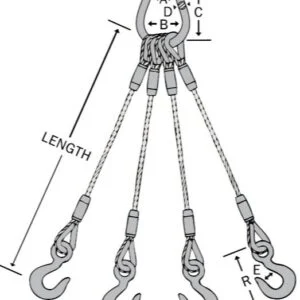
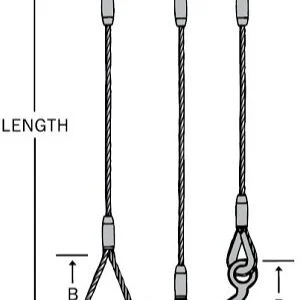
Wire Rope Slings guide
Types of Wire Rope Slings
Wire Rope Sling Configurations
Our inventory includes various configurations of wire rope slings to meet diverse lifting requirements:
- Single-leg, double-leg, three-leg, and four-leg slings for different load balancing needs.
- Eye-and-eye slings with Flemish eye splices for secure attachment points.
- Endless slings forming continuous loops for versatile applications.
- Braided and grommet slings designed for flexibility and strength.
- Bridle slings with multiple legs to distribute weight over several points.
Each type is engineered to optimize load capacity and safety per industry standards such as ASME B30.9 and OSHA guidelines.
Applications and Industry Uses
Common Applications of Wire Rope Slings
Wire rope slings from Elko Wire Rope are highly versatile and used in a wide range of industries and job sites:
- Construction for crane lifting, rigging steel frameworks, and hoisting heavy materials.
- Manufacturing and industrial sectors for load handling, assembly line operations, and equipment positioning.
- Marine and offshore environments requiring corrosion-resistant galvanized or stainless steel slings.
- Mining and logging for lifting heavy equipment and materials safely.
- Architectural installations including cable railings, tension structures, and safety guardrails.
Our slings are designed to perform in harsh environments, delivering reliable service and load security across all applications.
Key Advantages of Wire Rope Slings
Benefits of Wire Rope Slings
Wire rope slings provide several benefits that make them the preferred choice for riggers and engineers:
- Exceptional tensile strength and load-bearing capacity.
- Excellent abrasion and fatigue resistance for long-lasting durability.
- Flexibility allowing easy handling and installation around complex load shapes.
- Resistance to corrosion when galvanized or stainless steel options are selected.
- Cost-effectiveness compared to alternative slings without compromising performance.
Elko Wire Rope ensures every sling meets strict quality standards to guarantee safety and efficiency on your job site.
Custom Fabrication and Services
Custom Fabrication and Support Services
Understanding that lifting needs vary, Elko Wire Rope offers:
- Custom wire rope sling fabrication tailored to your specific load capacity, length, and end fittings.
- Inspection and testing services to ensure sling integrity and regulatory compliance.
- Expert consultation for selecting the right sling type, materials, and configurations.
Our expert team supports your project from design to deployment, ensuring optimal sling performance.
Proper Use and Maintenance Tips
Proper Use and Maintenance Tips
To maximize the lifespan and safety of wire rope slings:
- Inspect slings daily before use for signs of wear, corrosion, kinks, or damage.
- Follow correct sling angles and hitching methods to avoid overload.
- Store slings in clean, dry, ventilated conditions to prevent corrosion.
- Avoid dragging slings over abrasive surfaces and protect them from chemical exposure.
Elko Wire Rope provides guidance on sling care and usage to help prevent premature failure.
Commitment to Quality and Customer Satisfaction
At Elko Wire Rope, we take pride in delivering wire rope slings manufactured with precision and rigor. Our focus on associate involvement, continual process improvement, and stringent quality controls ensures zero defects and reliable performance in every sling. Competitive pricing, prompt delivery, and customer-focused service are pillars of our business philosophy. Trust Elko Wire Rope for all your rigging and lifting equipment needs.
Wire Rope Sling Capacity Chart
Wire Rope Sling Capacity Chart
Approximate rated capacities for single-leg EIPS IWRC wire rope slings with mechanical (pressed) Flemish eye splices, 5:1 design factor, in tons (2,000 lb). Always use the capacity on your sling's tag. Ratings vary by manufacturer, rope construction and end fittings.
| Diameter (in) | Vertical | Choker | Basket (vertical legs) |
|---|---|---|---|
| 1/4 | 0.65 | 0.49 | 1.3 |
| 5/16 | 1 | 0.75 | 2 |
| 3/8 | 1.4 | 1 | 2.8 |
| 7/16 | 1.9 | 1.4 | 3.8 |
| 1/2 | 2.5 | 1.9 | 5 |
| 9/16 | 3.2 | 2.4 | 6.4 |
| 5/8 | 3.9 | 2.9 | 7.8 |
| 3/4 | 5.6 | 4.2 | 11 |
| 7/8 | 7.6 | 5.7 | 15 |
| 1 | 9.8 | 7.4 | 20 |
| 1-1/8 | 12 | 9 | 24 |
| 1-1/4 | 15 | 11 | 30 |
| 1-3/8 | 18 | 14 | 36 |
| 1-1/2 | 21 | 16 | 42 |
Multi-leg bridles are rated by leg angle. A 2-leg bridle at 60° carries about 1.7 times the single-leg vertical rating; 3-leg and 4-leg bridles at 60° carry about 2.6 times. Flatter angles cut capacity fast. See the full wire rope sling capacity chart and working load limits for every diameter and angle, and 6x19 vs 6x37 construction for choosing the rope.
Inspect before every use with our rigging inspection checklist.
Questions about wire rope slings
What is a wire rope sling?
A wire rope sling is a type of lifting device made from steel wire ropes, used for hoisting and rigging heavy loads in industrial, construction, and mining applications.
What are the main types of wire rope slings?
The main types include single-leg, double-leg, three-leg, and four-leg slings, as well as braided and grommet slings.
What industries commonly use wire rope slings?
Wire rope slings are widely used in construction, mining, marine, oil & gas, and heavy industrial operations.
What are Flemish eye slings?
Flemish eye slings feature a loop formed by unlaying the rope strands, weaving them back together, and swaging the ends—a strong and reliable end connection.
What are the advantages of using wire rope slings?
They offer high strength, abrasion resistance, flexibility, and are capable of handling extreme environments and loads.
How do I choose the right wire rope sling for my project?
Consider factors such as load weight, lifting angle, length, end fittings, number of legs, and environmental conditions.
Are wire rope slings better than chain slings?
Wire rope slings are generally more flexible and lighter, while chain slings are better for rugged, high-temperature conditions. The choice depends on application needs.
Can wire rope slings be used for overhead lifting?
Yes, they are designed for overhead lifting when manufactured to standards like ASME B30.9 and OSHA guidelines.
How often should wire rope slings be inspected?
Before use on each shift by a competent person, plus a documented periodic inspection by a qualified person at least once a year (monthly to quarterly for severe service). See our rigging inspection checklist for removal criteria.
What causes wire rope slings to wear out?
Common causes include abrasion, overloading, kinking, corrosion, and improper storage or handling.
What is the working load limit (WLL) for a wire rope sling?
The WLL depends on the rope diameter, configuration, and number of legs. Always refer to the manufacturer's specifications.
Can Elko Wire Rope fabricate custom wire rope slings?
Yes, Elko Wire Rope offers custom fabrication services to meet specific lifting and rigging requirements.
What certifications do Elko Wire Rope slings meet?
Their slings are typically manufactured to meet ASME B30.9, OSHA standards, and relevant industry certifications.
Are galvanized or stainless steel wire rope slings better?
Galvanized is better for general corrosion resistance, while stainless steel offers superior corrosion resistance in marine or chemical environments.
What is the difference between eye-and-eye and endless wire rope slings?
Eye-and-eye slings have loops on both ends, while endless slings form a continuous loop that can be used in multiple configurations.
Can wire rope slings be repaired?
Wire rope slings with damaged rope are not repaired; they are removed from service and replaced. Only the sling manufacturer or a qualified person can replace fittings, and the repaired sling must be proof tested before use.
Do wire rope slings require load tags?
Yes, slings should have permanently affixed tags with WLL, diameter, and manufacturer information, as required by OSHA and ASME.
What is sling angle and how does it affect load capacity?
Sling angle is measured between the sling leg and the horizontal. The flatter the angle, the more tension on each leg: at 60° a leg carries about 87% of its vertical rating, at 45° about 71%, and at 30° only 50%. Keep angles at 45° or more.
Are sling inspections offered by Elko Wire Rope?
Yes, Elko Wire Rope offers inspection and testing services for all types of wire rope slings.
How do I store wire rope slings properly?
Store in a clean, dry, and well-ventilated area away from chemicals and moisture, preferably hung or coiled to prevent kinks.
Get a quote on wire rope slings
Tell us what you are lifting and how. A branch will come back with the right sling and a price.