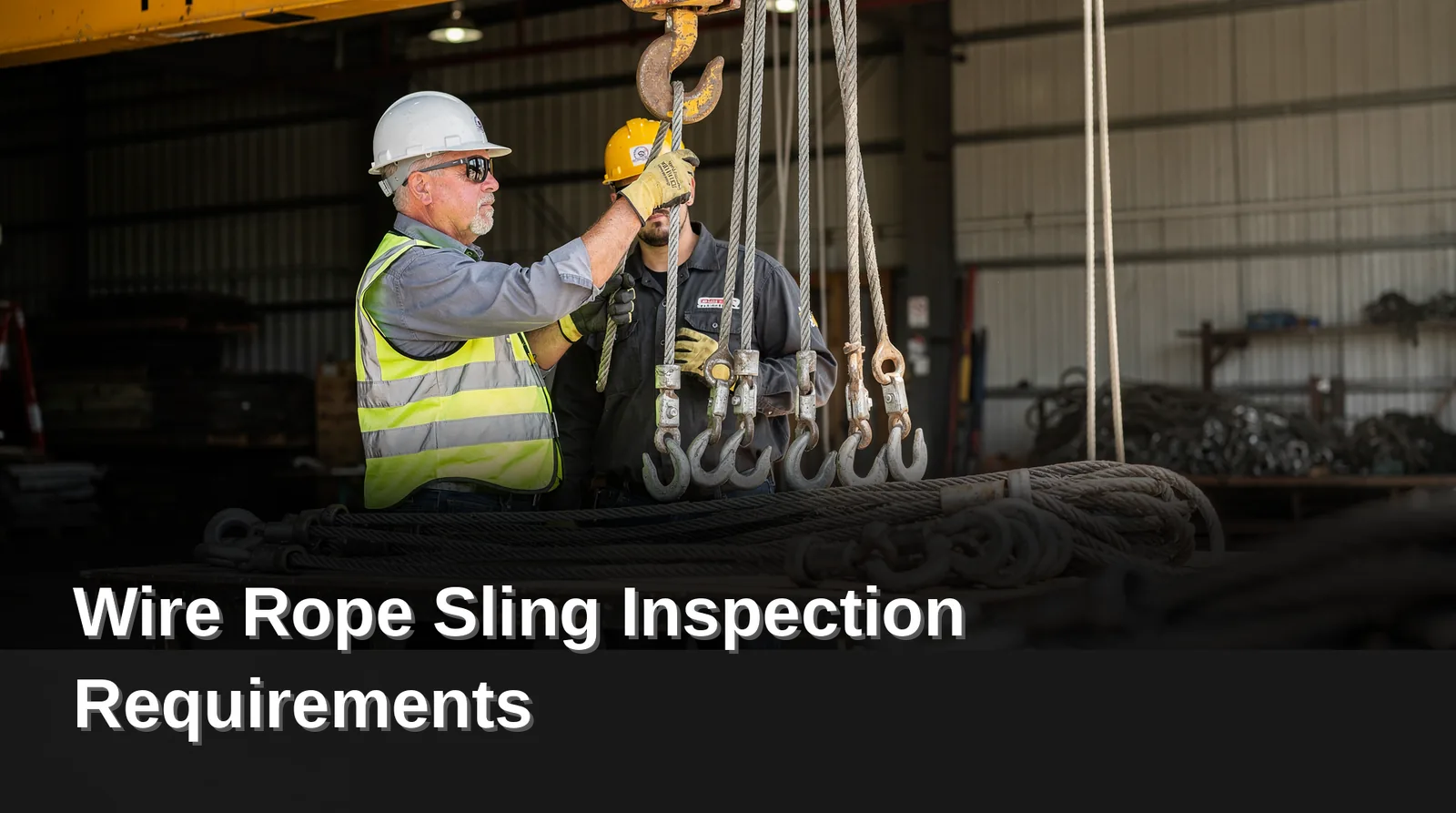
OSHA wire rope sling inspection requirements mandate a visual inspection by a competent person before each shift, as specified in 1926.1413. Elko Wire Rope supplies slings built to these standards for construction and mining. Inspections must check for broken wires, kinking, corrosion, or heat damage.
What Are OSHA Wire Rope Sling Inspection Requirements?
OSHA mandates specific wire rope sling inspection protocols under two primary standards. OSHA wire rope sling inspection requirements in general industry fall under 29 CFR 1910.184. Construction operations follow 29 CFR 1926.1413. Failure to meet these standards exposes operations to catastrophic equipment failure and regulatory penalties.
Who Can Perform a Wire Rope Sling Inspection?
A designated competent person must conduct the visual examination. OSHA 29 CFR 1926.1413 specifies that this individual begins a visual inspection prior to each shift the equipment is used. The inspection must be completed before or during that shift. This person identifies apparent deficiencies in running and standing wire ropes. Without this qualified assessment, hidden damage goes undetected until a load drops.
What Are the Key Wire Rope Sling Inspection Criteria?
Wire rope sling inspection criteria focus on identifying visible damage and deformation. Inspectors look for broken wires, severe corrosion, kinking, and crushing. Other removal criteria include birdcaging, heat damage, and worn end attachments. A sling exhibiting any of these conditions must be removed from service immediately. Elko Wire Rope manufactures slings to stringent standards, yet even the highest-quality equipment requires consistent oversight. The company’s mission centers on providing defect-free rigging products, a goal that aligns directly with rigorous pre-use checks.
How Does a Formal Inspection System Improve Safety?
Visual checks alone miss internal wire breaks and core degradation. While specialized non-destructive testing tools exist for internal core checks, OSHA baseline pre-shift inspections rely primarily on visual assessment by a competent person. This approach reduces the risk of relying on subjective judgment during critical lifts. Elko Wire Rope supplies these solutions to support safety managers in construction, mining, and heavy manufacturing environments.
What Tools Do You Need for a Sling Inspection?
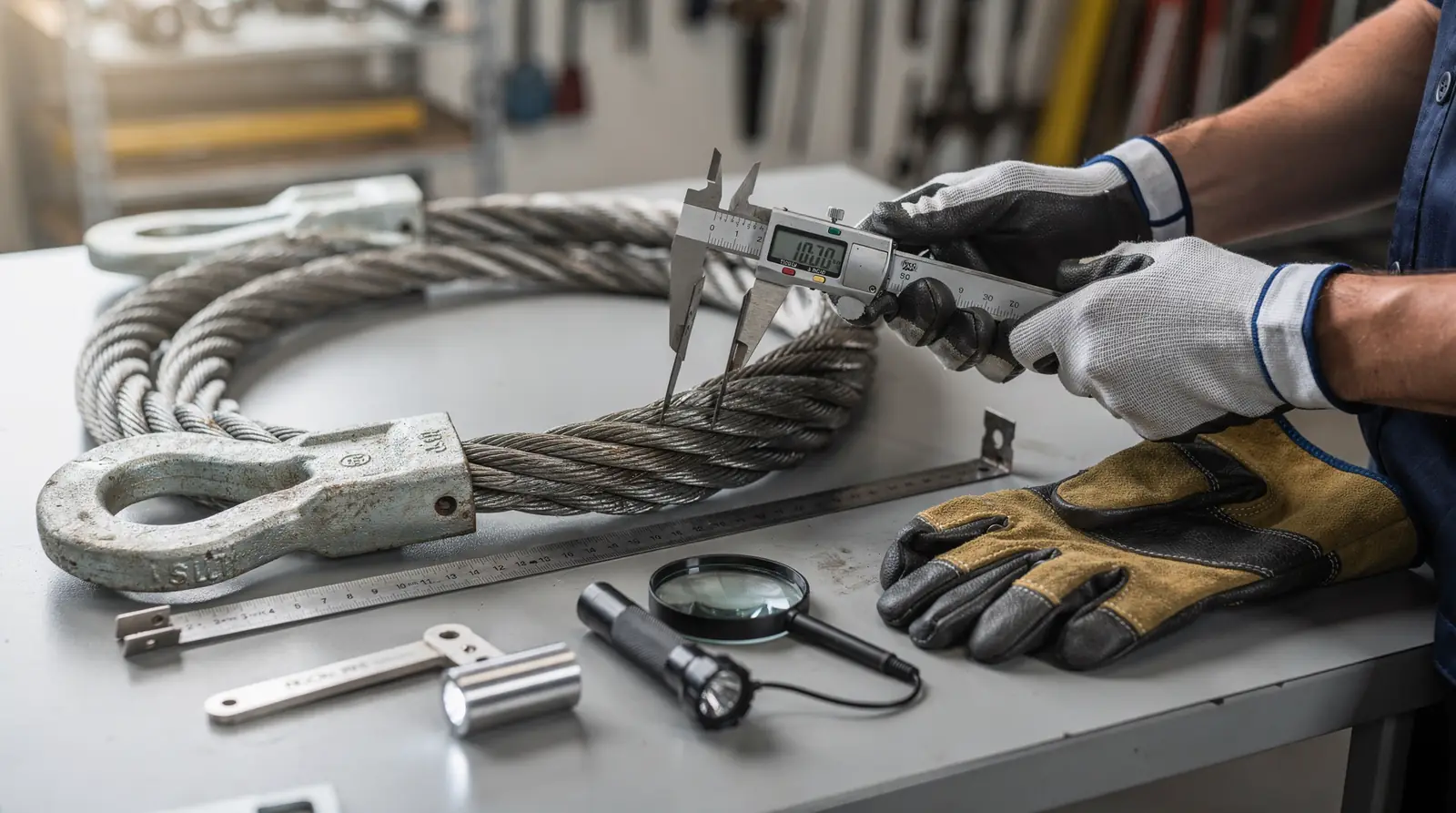
A wire rope sling inspection requires no specialized measuring instruments for the baseline shift check. The primary tool is a trained observer who meets the competent person standard under OSHA 1926.1413. This individual performs a visual assessment before each shift, completing the review before or during equipment use.
Untwisting the wire rope or booming down the crane is not required for this inspection. The process relies on direct observation of running and standing ropes for apparent deficiencies. This keeps the procedure efficient without compromising safety.
What Does a Competent Person Check During a Shift Inspection?
The competent person examines wire ropes likely to see use during the shift. The focus stays on visible damage, distortion, or wear that compromises lifting integrity. No disassembly or rope opening occurs during this phase.
What Inspection Criteria Apply to Wire Rope Slings?
OSHA wire rope sling inspection requirements center on identifying apparent deficiencies before load handling begins. The wire rope sling inspection criteria include checking for broken wires, kinking, crushing, corrosion, and other visible damage. Elko Wire Rope supplies rigging products built to stringent manufacturing standards for construction and mining applications. These products support inspection protocols by maintaining consistent, documented construction quality.
- Assign a competent person to the inspection role before the shift starts.
- Position equipment so running and standing ropes remain visible.
- Observe each rope for apparent deficiencies without untwisting or booming down.
- Complete the visual check before or during the shift.
- Document findings and remove damaged slings from service immediately.
How to Perform a Pre-Shift Wire Rope Sling Inspection?
A pre-shift wire rope sling inspection identifies visible damage before lifting begins. OSHA mandates this visual check for all wire ropes likely to see use during a shift. Skipping the inspection exposes crews to sudden sling failure and dropped loads. The process follows specific osha wire rope sling inspection requirements under standard 1926.1413.
A competent person conducts the inspection before or during each shift. Wire rope earns its place in slings through strength, durability, and abrasion resistance. The material also conforms to load shapes and handles hot materials safely. These properties make thorough inspection critical for construction and mining crews.
What are the key steps in a pre-shift wire rope sling inspection?
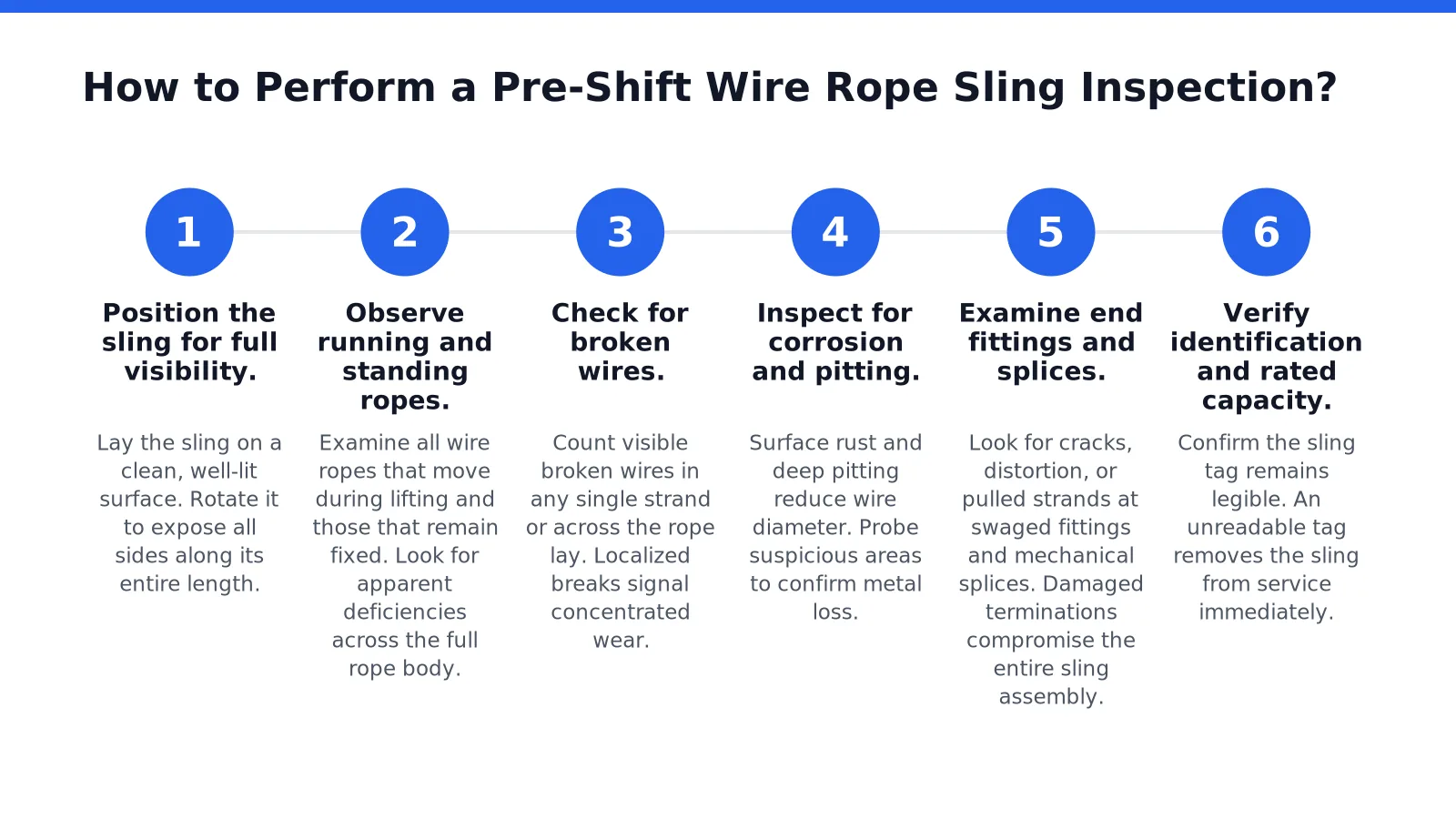
The inspection follows a structured sequence. Each step targets a specific failure mode.
- Position the sling for full visibility. Lay the sling on a clean, well-lit surface. Rotate it to expose all sides along its entire length.
- Observe running and standing ropes. Examine all wire ropes that move during lifting and those that remain fixed. Look for apparent deficiencies across the full rope body.
- Check for broken wires. Count visible broken wires in any single strand or across the rope lay. Localized breaks signal concentrated wear.
- Inspect for corrosion and pitting. Surface rust and deep pitting reduce wire diameter. Probe suspicious areas to confirm metal loss.
- Examine end fittings and splices. Look for cracks, distortion, or pulled strands at swaged fittings and mechanical splices. Damaged terminations compromise the entire sling assembly.
- Verify identification and rated capacity. Confirm the sling tag remains legible. An unreadable tag removes the sling from service immediately.
What apparent deficiencies require immediate removal from service?
OSHA lists specific conditions that disqualify a sling. Any one of these triggers removal.
Severe localized wear that reduces the original rope diameter by one-third or more demands immediate action. Kinking, crushing, or birdcaging indicates internal structural damage. Heat damage from exposure to extreme temperatures alters the wire's metallurgical properties. Stretched end fittings or cracked swages signal overload history. Each deficiency represents a failure point that grows worse under tension.
Wire rope sling inspection criteria from Elko Wire Rope align with these federal standards. The company manufactures slings to stringent safety and reliability specifications. Proper pre-shift checks protect both personnel and equipment from preventable accidents.
Wire rope sling inspection criteria center on identifying visible damage, deformation, and wear that compromise lifting safety. OSHA wire rope sling inspection requirements mandate a competent person examine slings before each shift for conditions that warrant immediate removal from service.
What Conditions Require Immediate Removal of a Wire Rope Sling?
A sling must be taken out of service when inspectors find broken wires, severe corrosion, kinking, crushing, or birdcaging. Heat damage, evidenced by discoloration or loss of lubricant, also disqualifies a sling from continued use. Any reduction in rope diameter below the manufacturer's tolerance signals structural compromise.
How Does Core Type Affect Inspection Findings?
Core construction directly influences failure patterns inspectors encounter. A sling manufactured with a fiber-core is usually more flexible but is less resistant to environmental damage, according to OSHA guidance on safe sling use. Moisture intrusion and chemical exposure degrade fiber cores internally, often without external warning signs.
A core made of a wire rope strand tends to have greater strength and is more resistant to heat damage. Independent Wire Rope Core (IWRC) slings maintain structural integrity under higher temperatures, making them preferable for foundry and steel mill applications. Inspectors must verify core type before applying rejection criteria, as damage thresholds differ between fiber and steel cores.
What Role Does Rope Lay Play in Inspection?
The lay of a wire rope describes the direction the wires and strands are twisted during the construction of the rope. Most wire rope is right lay, regular lay. Inspectors check for unlaying, where strands separate from the rope body, indicating torque imbalance or overload. Lang lay ropes, where wires and strands twist in the same direction, show different wear patterns and require specialized evaluation.
Elko Wire Rope stands out with its dedication to using domestic USA-made products, ensuring quality and supporting local manufacturing. This commitment means inspectors receive slings with consistent construction characteristics, simplifying the evaluation of wire rope construction integrity across multiple lifting assets.
Wire rope sling inspection criteria also include verifying legible identification tags, checking end attachment wear, and confirming the sling's rated capacity matches the lift. Missing or illegible tags constitute an automatic removal condition under OSHA standards.
How to Document and Act on Inspection Findings?
Documenting wire rope sling inspection results creates a permanent safety record. A structured approach prevents overlooked defects and ensures compliance with federal standards. Without proper documentation, organizations risk equipment failure and regulatory penalties.
A sling self-inspection checklist helps teams verify compliance with OSHA 29 CFR 1910.184 and 1926.251. The checklist covers safe operating practices and inspection criteria across multiple sling types. OSHA wire rope sling inspection requirements demand consistent, verifiable records for every lifting device in service.
What should a wire rope sling inspection report include?
A complete report captures far more than a pass or fail notation. Prompts guide checks for identification, rated capacities, damage, deformation, temperature limits, proof testing, and documentation. Each field addresses a specific wire rope sling inspection criteria element that OSHA mandates.
How are damaged slings handled after inspection?
Removal-from-service conditions are clearly listed in the checklist. Any sling exhibiting broken wires, kinking, crushing, or core protrusion must be immediately tagged and quarantined. The equipment stays out of operation until a qualified person authorizes repair or disposal.
Follow these steps to document and act on findings:
- Assign a unique identifier to each sling and record its rated capacity before the first inspection.
- Conduct a visual examination using the checklist prompts for damage, deformation, and temperature exposure.
- Mark each criterion as pass or fail, noting specific measurements where applicable.
- Tag any sling that fails inspection with a removal-from-service label and isolate it from active rigging inventory.
- File the completed checklist in a centralized log accessible to safety managers and shift supervisors.
Elko Wire Rope operates service locations across the USA, including Salt Lake City, Elko, Safford, and Phoenix. These facilities support inspection programs with replacement slings and technical guidance. Consistent documentation protects crews and extends the service life of rigging assets.
Conclusion
A competent person who applies these inspection criteria and documents findings on a structured checklist protects both personnel and equipment from preventable failure. Any sling exhibiting broken wires, kinking, crushing, or an illegible tag must be immediately tagged and quarantined. Consistent documentation and prompt removal of deficient slings from active inventory form the foundation of a compliant lifting program.