
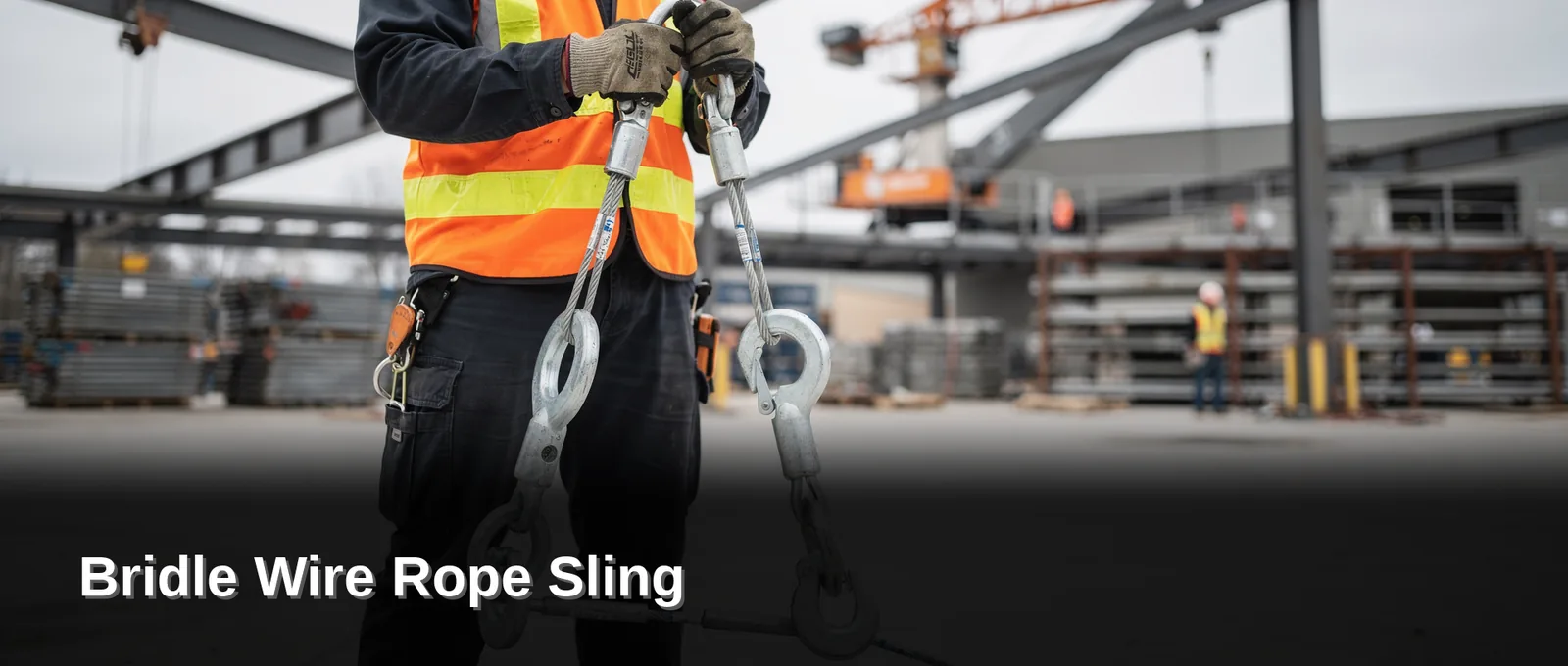
Single leg slings suit direct vertical lifts with a single attachment point. Multi-leg bridle slings distribute loads across multiple fixed lifting points, increasing stability. Elko Wire Rope is a leading manufacturer and supplier of high-quality wire rope slings and rigging solutions.
What Defines a Single Leg Wire Rope Sling?
A single leg wire rope sling is the most direct lifting configuration available. The sling connects the lifting device to one load point without the complexity of multiple branches. This straightforward design makes the single leg configuration a dependable solution across construction sites, fabrication yards, offshore operations, and industrial facilities where heavy equipment must move safely.
Elko Wire Rope manufactures and supplies high-quality wire rope slings and rigging solutions. The company's products adhere to stringent manufacturing standards for safety and reliability. For rigging professionals who need predictable, controlled lifts, the single leg design eliminates variables that multi-leg configurations introduce.
When Does a Single Leg Configuration Make Sense?
A single leg sling suits loads with one designated lifting point. The configuration delivers direct force transfer from the hoist to the load without distributing tension across multiple branches.
The trade-off matters for rigging decisions. A sling with more legs generally provides greater stability and control during lifting. However, additional legs add weight, cost, and complexity when the excess branches do not contribute to the task at hand.
How Does a Single Leg Sling Compare to Other Wire Rope Sling Types?
Understanding wire rope sling types helps rigging teams select the right tool for each lift. The comparison below outlines the core differences.
A bridle wire rope sling distributes load across multiple attachment points, which increases stability for irregular or unbalanced loads. The single leg configuration remains the preferred choice when the load has one engineered lifting point and the lift path is vertical.
Elko Wire Rope offers single leg wire rope slings built to stringent manufacturing standards. Rigging teams gain a dependable, direct lifting solution without unnecessary hardware or branch complexity.
How Does a Bridle Wire Rope Sling Distribute Load?
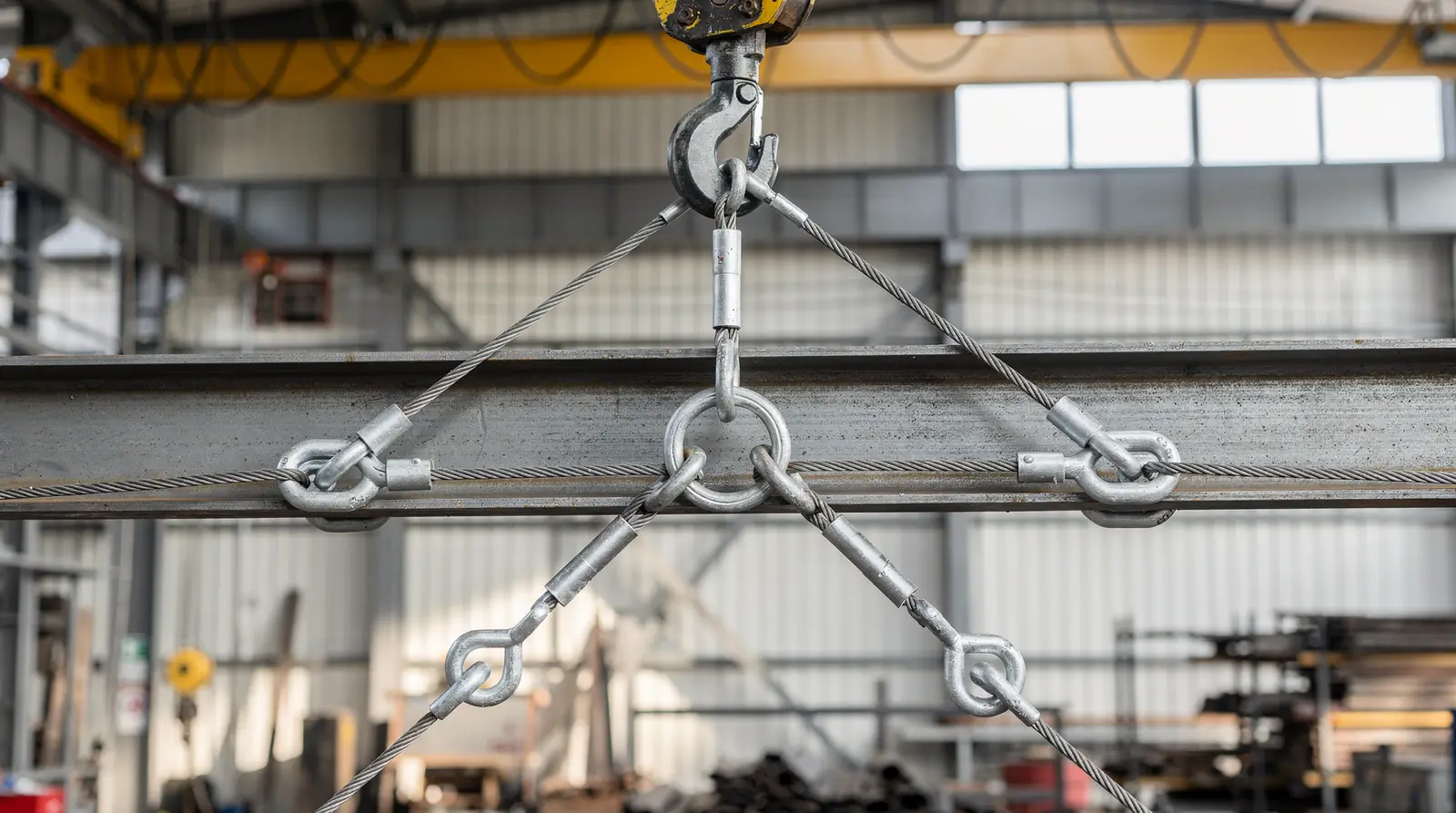
A bridle wire rope sling distributes load by dividing the total weight across multiple attachment legs connected to a central lifting point. Engineers achieve balanced force distribution, which minimizes stress on any single component and stabilizes irregularly shaped loads during hoisting. Without proper load distribution, rigging assemblies risk concentrated stress that accelerates wear and compromises lift safety.
What Components Allow a Bridle Sling to Balance Heavy Loads?
Three component parts form every bridle wire rope sling: a top lifting fixture, connector fittings at the bottom, and wire rope legs that join the top lifting fixture to the bottom connection points. This integrated structure transfers force predictably from the crane hook down through each leg. Most bridle slings manufactured for the crane and rigging industry feature an oblong style master link at the apex. The oblong design permits smooth articulation as the sling adjusts to load angles.
Why Does the Master Link Configuration Matter?
The master link with sub-assemblies proves particularly advantageous for bridle sling assemblies that feature more than two or three legs. Individual sub-assemblies connect each leg independently, preventing tangling and ensuring every attachment point carries its intended share of the load. A standard 3 leg wire rope sling provides enhanced stability for large fabricated structures and construction materials where a single leg wire rope sling configuration cannot maintain balance. Different wire rope sling types suit varying center-of-gravity requirements, making configuration selection critical for safe rigging practices.
Proximity to service centers streamlines procurement when specialized hardware is required. Elko Wire Rope operates locations across the USA, including Salt Lake City, Elko, Safford, and Phoenix, providing local access to rigging solutions and technical guidance for complex lifts involving bridle assemblies.
Which Wire Rope Sling Types Suit Fixed Lifting Points?
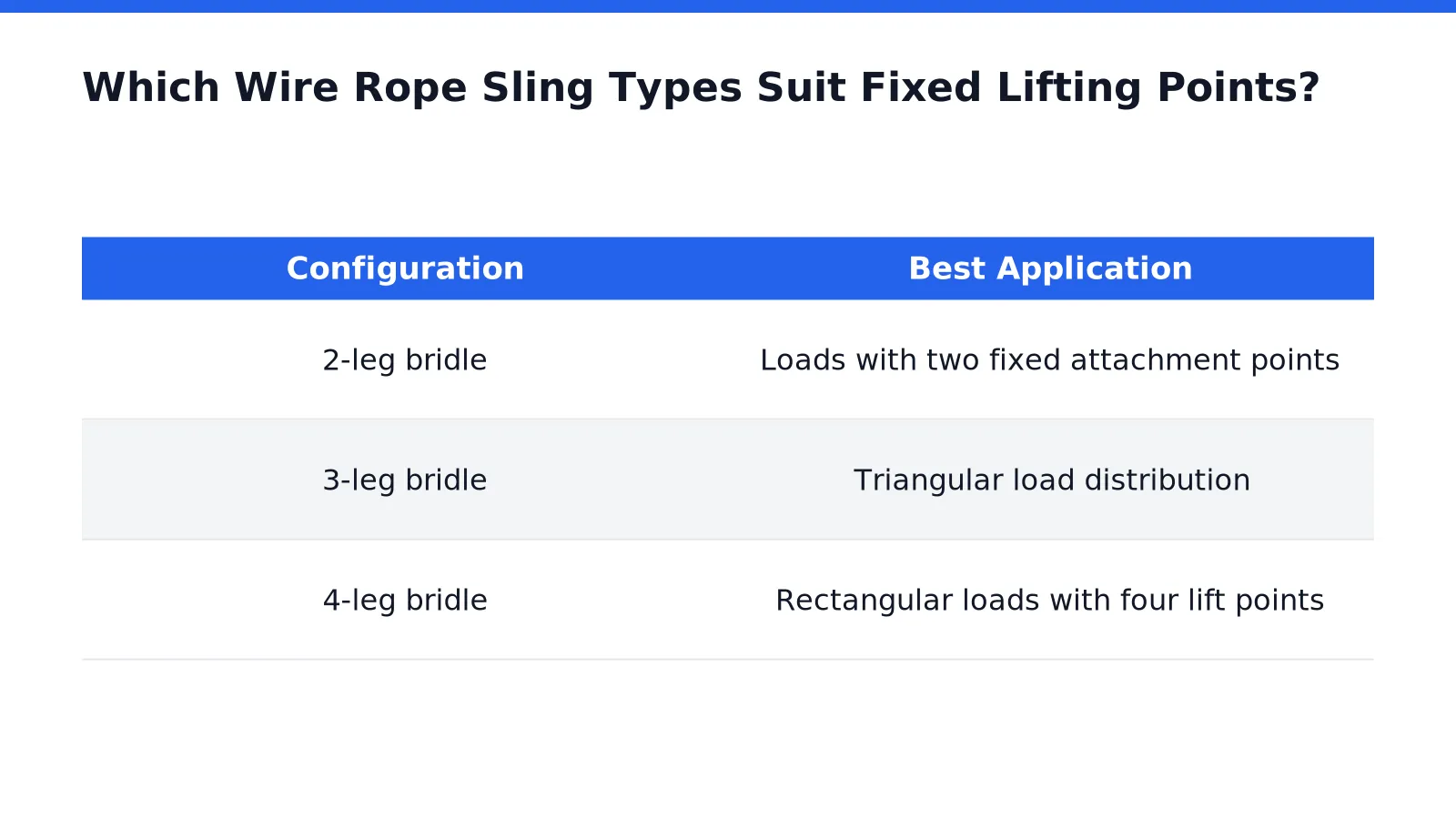
Loads with fixed lifting points demand rigging that connects multiple attachment locations to a single crane hook. A bridle wire rope sling assembly provides the ideal solution for these configurations. Without the correct multi-leg configuration, lifting crews risk load instability, unbalanced tension, and potential equipment damage during critical hoisting operations.
What is a bridle sling assembly?
Bridle slings, also referred to as multi-leg bridle slings, bridle assemblies, sling bridle assemblies, hardware bridle slings, or type 10 slings, feature three component parts. A top lifting fixture connects to bottom connector fittings through wire rope legs. Most assemblies manufactured for the crane and rigging industry feature an oblong style master link, according to Lift-It Manufacturing's educational series on multi-leg bridle assemblies. Master links with sub-assemblies offer another viable configuration option.
How do synthetic bridle slings protect sensitive loads?
Synthetic slings serve as versatile rigging tools made from high-strength synthetic fibers such as nylon or polyester. These materials provide safe, effective, and damage-free load handling. The non-abrasive surface prevents scratching or marring on polished equipment surfaces. Elko Wire Rope stocks various types of synthetic slings to suit different applications, ensuring project managers can match the sling material to the load's surface sensitivity requirements.
Bridle sling configurations for fixed lifting points:
Bridle slings handle loads with fixed lifting points effectively. The multiple legs distribute weight evenly across attachment locations. This configuration eliminates the twisting and shifting that plague single-point lifts on multi-point loads.
What Are the Capacity Limits of Each Configuration?
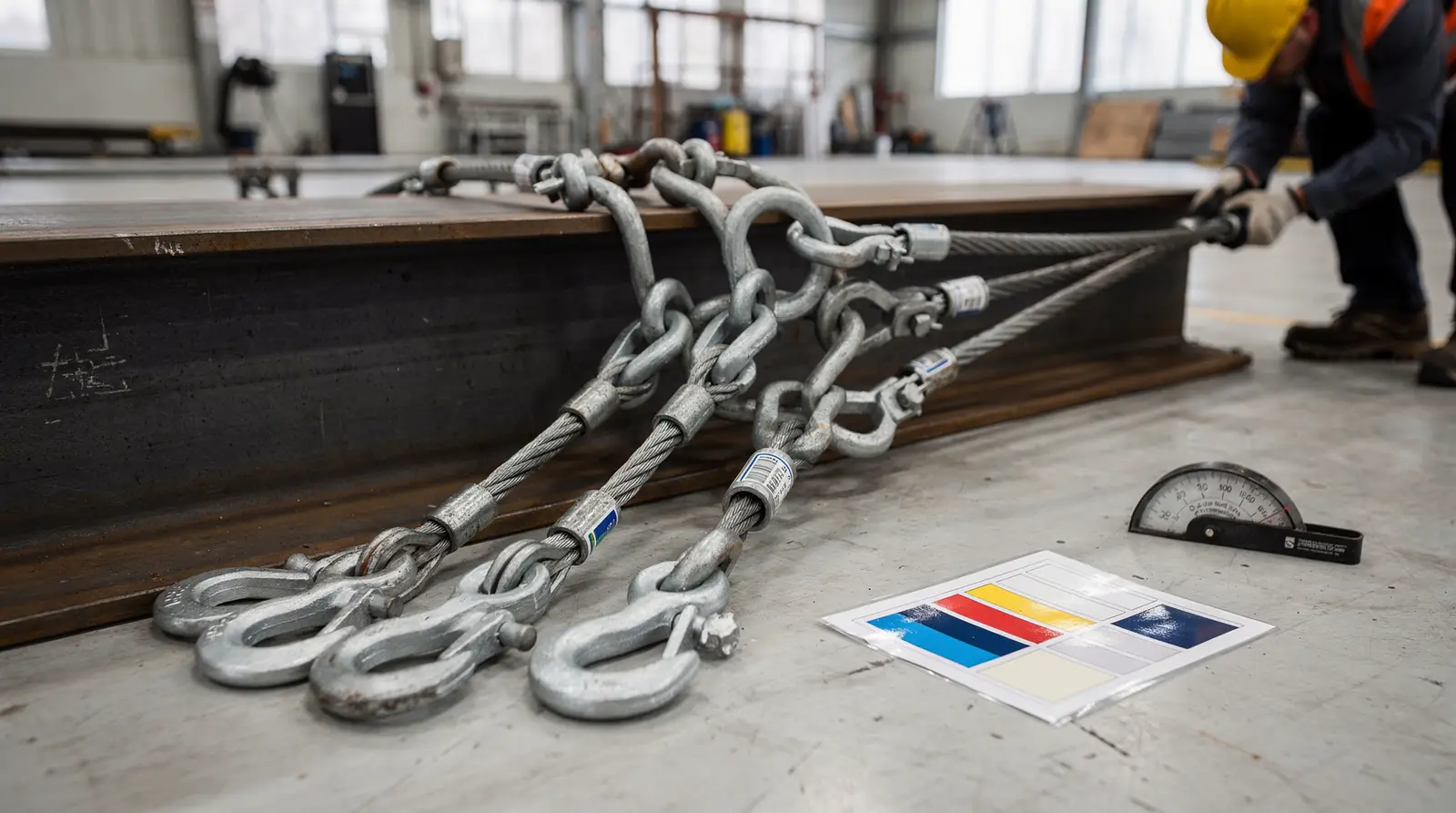
Capacity limits for wire rope sling configurations depend on the number of legs, the angle of those legs, and the load's physical characteristics. A single leg wire rope sling provides a straightforward vertical lift. Its capacity drops sharply when used at an angle. Multi-leg configurations distribute weight differently. Each leg's effective working load limit changes with the horizontal angle between the legs and the load.
How does leg count affect lifting capacity and stability?
More legs generally provide greater stability and control during lifting. However, additional legs also increase the assembly's weight and cost. According to U.S. Cargo Control's guidance on sling selection, excess legs become overkill when they do not contribute to the task at hand. Load weight and shape are primary factors to consider before choosing the number of legs. A symmetrical, rigid load often benefits from a four-leg bridle. An elongated load with only two attachment points gains nothing from unused legs.
What role does sling angle play in rated capacity?
The horizontal sling angle directly determines how much tension each leg carries. As the angle decreases from 90 degrees, the load on each leg increases significantly. A bridle wire rope sling rated for a specific vertical capacity must be derated when the legs form a 60-degree or 45-degree angle. Rigging professionals calculate this reduction to prevent overloading any single component. Ignoring angle factors leads to equipment failure and unsafe lifts.
Among the various wire rope sling types, bridle configurations offer versatility for loads with multiple lifting points. Elko Wire Rope supplies these configurations with a focus on defect-free products. The company's mission centers on delivering competitively priced manufactured rigging products and hardware on time. Every sling configuration leaves the facility built to meet stringent standards, ensuring that capacity ratings are reliable and clearly documented for field use.
How Do You Select the Right Sling for Your Lift?
Selecting the correct sling configuration ensures a lift is stable, predictable, and completed safely the first time. Capacity ratings alone do not guarantee a successful pick. The geometry of the rigging, the nature of the load, and the real-world conditions of the jobsite all shape the final choice.
What Determines the Ideal Wire Rope Sling Type?
A bridle wire rope sling distributes tension across multiple legs, which is essential when a load has fixed, spaced lifting points. Engineering teams evaluate this configuration when stability matters more than raw vertical capacity. A single leg wire rope sling, by contrast, connects a single hook point to the load. This configuration suits straightforward vertical lifts where the center of gravity is balanced and no lateral control is needed.
The range of available wire rope sling types includes single-part, multi-part, and grommet styles. Each type addresses different load diameters, hitch methods, and abrasion risks. Dynamic Lifting's industry guidance notes that field personnel depend on equipment that proves durable, readily available, and capable of handling real-world jobsite demands. Availability of the right style on the truck prevents improvisation that introduces risk.
How Do Jobsite Conditions Influence the Sling Selection?
Surface contact, chemical exposure, and edge sharpness all narrow the viable options. A load with polished or machined faces calls for a synthetic alternative to avoid marring. A rough steel casting benefits from a wire rope configuration that resists cutting. The company's commitment to domestic USA-made products delivers the traceability and support that project timelines require when conditions change without notice.
Why Does Lifting Angle Affect Sling Choice?
The horizontal sling angle directly dictates the tension imposed on each leg. Shallow angles multiply force well beyond the load weight itself. Calculating this tension determines whether a single leg or multi-leg assembly remains within its rated capacity. Understanding how lifting angles affect sling capacity prevents the hidden overload that leads to equipment failure. A configuration that appears adequate at 60 degrees often falls short at 30 degrees.
Elko Wire Rope builds its identity on trust, quality, and community spirit. That foundation translates to sling recommendations that prioritize integrity over convenience. Every specification flows from the same source that drives the company's personalized service and safety-focused culture.
Conclusion
The choice between a single leg and a multi-leg bridle sling depends on the load’s attachment points, stability requirements, and the horizontal sling angle. A single leg suits balanced vertical lifts, while a multi-leg configuration distributes tension across fixed points for greater control. Evaluate the load geometry and angle factors to select the configuration that keeps the lift within rated capacity and ensures a safe, predictable operation.